
Why God Often Used Stones to Mark His Miracles
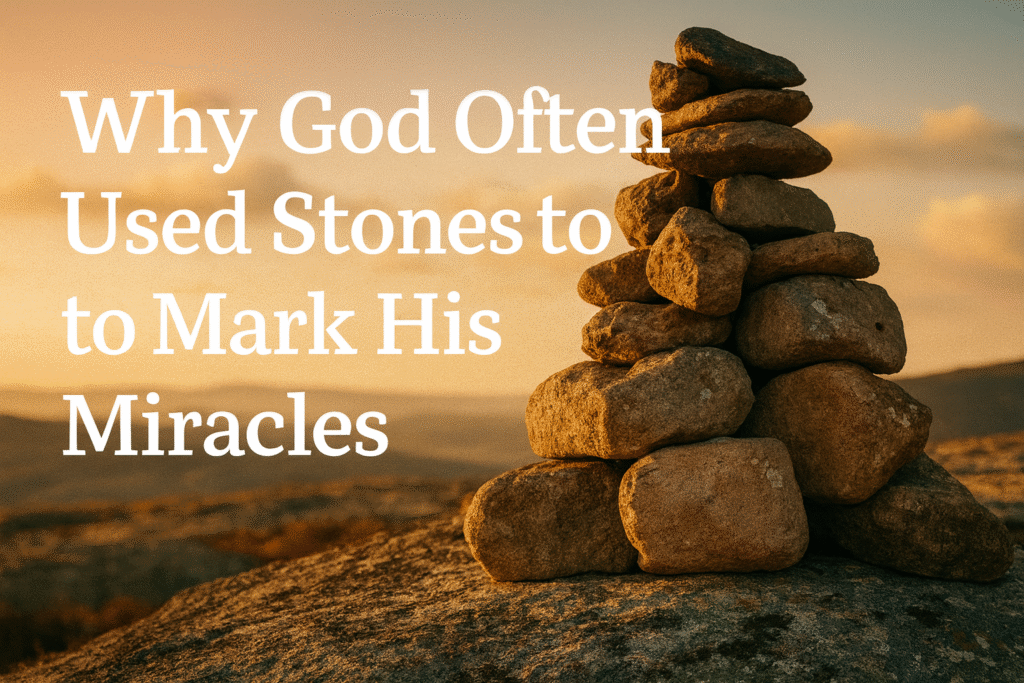
From the dawn of time, stones were far more than just part of the landscape. In the ancient world, especially throughout Scripture, they carried memory, meaning, and divine presence.
Whenever God performed a miracle or gave a promise, His people were often asked to set a stone, not as an idol but as a reminder. A reminder that the moment was real, that heaven and earth had met right there, and that the story must not be forgotten.
When Joshua led the Israelites across the Jordan River, twelve stones were raised from the riverbed. Each stone represented a tribe, and together they formed an altar of remembrance as a simple, solid testimony of what God had done.
In those days, faith was not only spoken; it was touched. Stones made it tangible. They connected spirit with matter, a bridge between belief and the physical world. They were not meant to be worshiped but to anchor gratitude and memory in something lasting.
Today, the same truth remains
We still need reminders, not because we forget God, but because we are human. A small stone held during prayer, a keepsake from a sacred place, or even one from the Land of Israel itself, can bring quiet reflection into our day and renew a sense of purpose.
Faith is not superstition. It is the living awareness that life has meaning, and sometimes, that awareness begins with something as simple and enduring as a stone.
Inspired by Joshua 4:6–7 – “These stones shall be a memorial to the children of Israel forever.”
Feel free to be part of our community. Have you ever visited a place that made you feel God’s presence through something tangible whether it’s a rock, a view or a quiet hill? Share your story below and let’s keep faith alive together.
You can follow, share, and give inspiration through our Facebook, Pinterest, and Instagram pages.
If you prefer to receive updates about new posts by e-mail, you can subscribe to our mailing list at the bottom of the site.